 From the APA President – Aliye Uc, MD
Dear APA Members,
Greetings from your first pediatrician president! I hope this letter finds you in good health and spirits. I am honored and excited to serve as the President of the American Pancreatic Association this year. I am humbled by the trust you have placed in me and I am committed to serving the association to the best of my abilities.
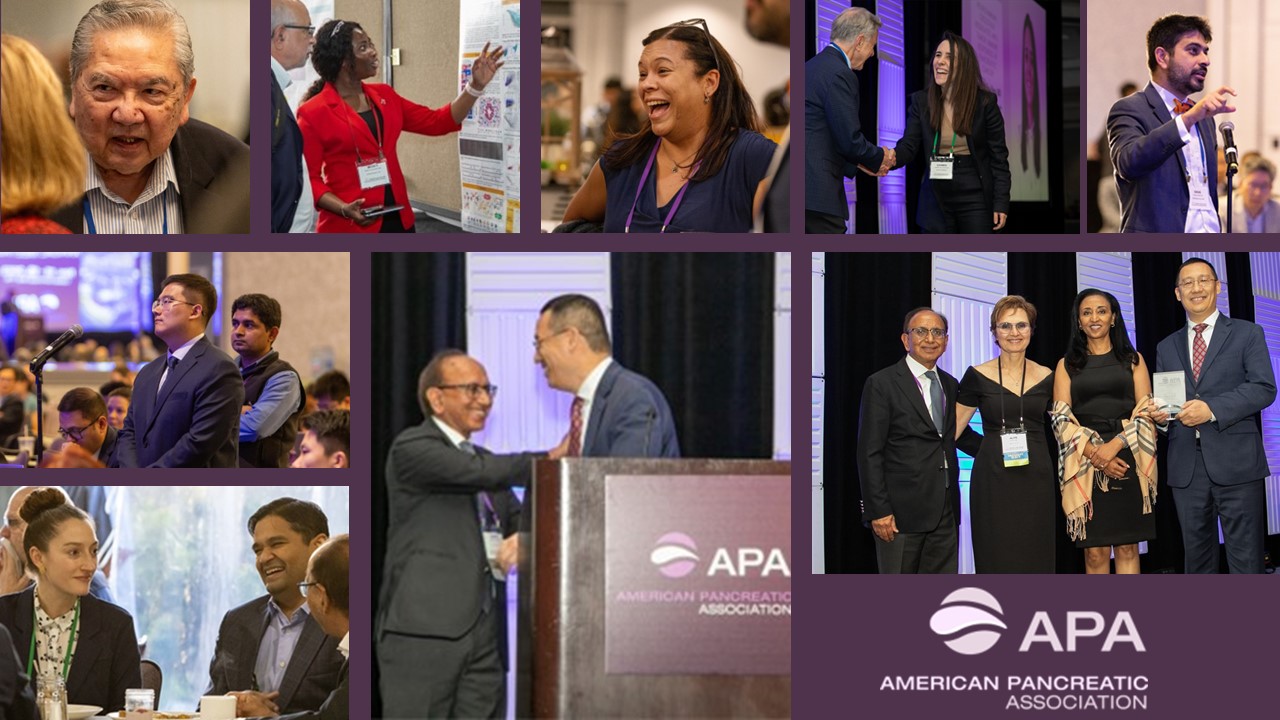
I would like to take this opportunity first to congratulate Dr. Min Li, as the APA Past-President for an outstanding work. 2023 APA Meeting has been largely successful due to Dr. Li’s vision and leadership, and we thank him for his deep commitment to the APA. Thank you to the Program Committee and all who assisted in planning the APA 2023 meeting, which was a great success. Our 2023 meeting had a record 548 abstract submissions and over 500 registrants. Congratulations to our award winners Drs. Darwin Conwell, John Williams, and all of the research presentation awardees. Other highlights of the meeting were the Premeeting on Cancer Cachexia that brought multiple disciplines to address this challenging problem and the always engaging Diversity, Equity and Inclusion Session, this time led by Dr. Dave McIntosh from UCLA. APA meetings continue to be successful due to the quality, quantity and significance of the science, and engagement of its participants.
This year also marked some firsts. The APA has held a two-day Strategic Planning Meeting in June 2023 that led to the creation of our organization’s first Strategic Plan, with the purpose of investing in the future of APA. There will be several new initiatives coming through this strategic plan, so stay tuned. Another first is the renaming of the APA Distinguished Service Award as “Dr. Ashok K Saluja Distinguished Service Award” for his many years of dedication and service to the APA. Congratulations Dr. Saluja for this well-deserved recognition!! Finally, I want to welcome Dr. Dhiraj Yadav to the APA Board as Councilor. I look forward to working with him and the APA Board in the coming year.
Save the date for our next annual meeting to be held at the Hyatt Regency at Maui, Hawaii, December 9-12, 2024, our first time back to our joint meeting with the Japanese colleagues since the pandemic! This meeting promises to be the largest ever focusing on pancreas, bridging East to West, with our European/Asian (IAP) and Chinese (CAP) colleagues also participating. We are looking forward to gather again in beautiful Hawaii for riveting science and lively discussions.
Before I close, I would like to remind everyone, the mission of the APA: “to foster clinical and basic science research needed to cure diseases of the pancreas. We strive to continue advancing the field of research, while training the next generation of researchers devoted to finding a cure for these deadly diseases”.
Please do not hesitate to contact me or any of our Board or staff members if you have any questions, concerns, or suggestions. We are always happy to hear from you and to serve you better.
Thank you for being a part of our beloved APA. I look forward to hearing from you and seeing you at our next meeting in Hawaii!
Sincerely,
Aliye Uc, MD